
Inboard Technology Electric Skateboard Update | Shark Tank Season 8
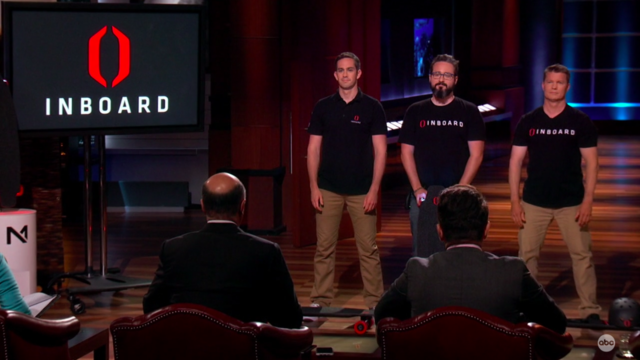
Ryan Evans, David Evans, and Chris Harley grew tired of electric skateboards that just didn’t cut it for city commuting. So, they came up with the M1 Electric Skateboard, built around their patented ‘Manta Drive’ system, which powers the wheels without needing any belts or gears. With swappable batteries and easy-to-use controls, it’s a smoother, more efficient way to get around compared to the usual options. Let’s see what happens between the sharks and the entrepreneurs in our Inboard Technology update and pitch recap.
If you’re short on time, here’s a quick overview of what happened to Inboard Technology after
Ryan, David, and Chris appeared on
In terms of an Inboard Technology update, the company experienced a surge in M1 Electric Skateboard sales. However, their risky shift into the electric scooter market, followed by the cancellation of G1 scooter pre-orders, led to severe financial troubles, ultimately causing the company to go out of business.
| Shark | Result |
| Lori Greiner and Kevin O’Leary | Accepted offer of $750,000 loan at 9% interest + 4% equity |
| Robert Herjavec | No offer |
| Chris Sacca | No offer |
| Mark Cuban | No offer |
Shark Tank Inboard Technology Pitch
- Entrepreneurs: Ryan Evans, David Evans, and Chris Harley
- Business: Electric skateboards and scooters
- Ask: $750,000 for 4% equity
- Result: $750,000 loan at 9% interest + 4% equity
- Shark: Lori Greiner and Kevin O’Leary
Ryan, David, and Chris kicked off their pitch by sharing their journey and inviting the sharks to try out the M1 Skateboard firsthand.
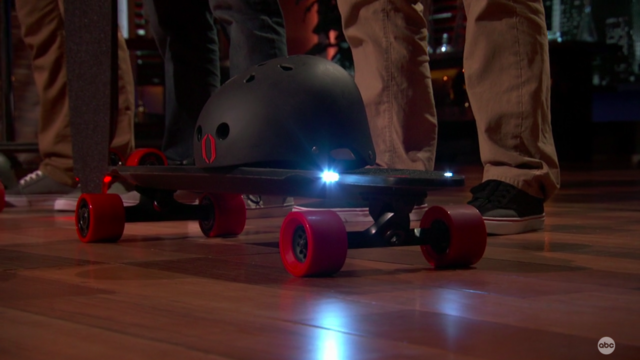
The M1 is an electric skateboard built for city commuting. It can reach speeds of up to 20 mph and has a range of 7 to 10 miles on a single charge.
What sets the M1 apart is its “Manta Drive” in-wheel motor, which doesn’t need belts or gears. This makes for less maintenance and a smoother ride.
The board has built-in LED headlights and taillights for safer night riding. Its 37-inch deck maintains the classic skateboard look.
It can hold riders up to 250 pounds. At just 14 pounds, it’s lightweight and easy to carry around, whether on public transport or into a building.
Another standout feature is its swappable battery packs. These allow riders to quickly change batteries instead of waiting for a recharge.
Additionally, it takes about 90 minutes to charge each battery fully. Riders can control the board with a handheld wireless remote or through a mobile app.
It also comes with regenerative braking, so the battery charges a bit while you’re slowing down.
The M1 is designed for people seeking an easy and reliable way to get around the city. It eliminates the hassles of traditional transportation.
When the sharks probed further, the entrepreneurs revealed they had already raised $2.7 million. They also shared that their company had a $10 million valuation.
Lori Greiner asked if the board could handle hills, and the founders confirmed it could.
They also added that when going downhill, the motors act as brakes and even recharge the battery.
Each M1 skateboard costs about $490 to make, and they sell them for $1,399. This gives them a healthy 65% profit margin.
With that margin, they had secured $5.6 million in global pre-orders, which they expected to fulfill by the end of the year.
Despite the strong numbers, Mark Cuban ultimately decided to exit the negotiations, saying the product was too niche and difficult to scale.
Robert Herjavec also declined, doubting its potential as a mass transportation option.
Chris Sacca agreed and decided to sit out as well.
Kevin O’Leary, however, offered a $750,000 loan at 8% interest over three years in exchange for 2.5% equity.
Lori Greiner made a similar offer but asked for 3% equity.
The founders stepped out to discuss the offers. When they returned, Kevin and Lori had teamed up, offering the same loan terms but asking for 5% equity, split between them.
After some back-and-forth, they finally settled on a $750,000 loan at 9% interest over three years in exchange for 4% equity.
To find out what happened next for their company, keep reading our Inboard Technology update.
Shark Tank Inboard Technology Update
Our Inboard Technology update found that the deal with Kevin and Lori never came to fruition.
Like many
This sparked a surge in sales, plans to expand their product line, and promising retail deals with major outlets like Best Buy.
However, in 2019, things went south when the company took a gamble and shifted into the electric scooter market with their G1 scooter.
While the move seemed promising at first, it turned out to be more complicated and time-consuming than they expected.
Further, our Inboard Technology update found that the company managed to raise over $8 million in extra funding and secured around 1,500 pre-orders for the G1 Glider.
However, the excitement fizzled when they canceled those pre-orders and refunded deposits after a potential deal to sell a fleet of G1 scooters to a major European company emerged.
That decision ended up causing major financial issues.
Co-founder Ryan Evans and the leadership team stayed optimistic, banking on promises from their financial backers to keep the company afloat during the G1’s development.
Sadly, that backing never came through, and Inboard Technology couldn’t stay afloat.
In November 2019, they had to lay off employees, liquidate their assets, and sell off their intellectual property.
By the end of 2019, Inboard Technology had closed its doors permanently, marking the end of both the M1 and its bold scooter ambitions.
Unfortunately, this will be our final Inboard Technology update.
For more updates from
Before you go, check out our Shark Tank Season 8 page for more updates

Andrew is a lifelong fan of Shark Tank and an entrepreneur at heart. He started Shark Tank Recap because he wanted a single place to track what happens to the companies, founders, and deals after they air on TV. With a sharp eye for business insights and a passion for all things Shark Tank, Andrew makes sure every recap is accurate, engaging, and fun.
- Andrew Smith
- Andrew Smith
- Andrew Smith
- Andrew Smith
- Andrew Smith
- Andrew Smith
- Andrew Smith
- Andrew Smith
- Andrew Smith
- Andrew Smith
- Andrew Smith
- Andrew Smith
- Andrew Smith
- Andrew Smith
- Andrew Smith
- Andrew Smith
- Andrew Smith
- Andrew Smith
- Andrew Smith
- Andrew Smith
- Andrew Smith
- Andrew Smith
- Andrew Smith
- Andrew Smith
- Andrew Smith
- Andrew Smith
- Andrew Smith
- Andrew Smith
- Andrew Smith
- Andrew Smith
- Andrew Smith
- Andrew Smith
- Andrew Smith
- Andrew Smith
- Andrew Smith
- Andrew Smith
- Andrew Smith
- Andrew Smith
- Andrew Smith
- Andrew Smith
- Andrew Smith
- Andrew Smith
- Andrew Smith
- Andrew Smith
- Andrew Smith
- Andrew Smith
- Andrew Smith
- Andrew Smith
- Andrew Smith
- Andrew Smith
- Andrew Smith
- Andrew Smith
- Andrew Smith
- Andrew Smith
- Andrew Smith
- Andrew Smith
- Andrew Smith
- Andrew Smith
- Andrew Smith
- Andrew Smith
- Andrew Smith
- Andrew Smith
- Andrew Smith
- Andrew Smith
- Andrew Smith
- Andrew Smith
- Andrew Smith
- Andrew Smith
- Andrew Smith
- Andrew Smith
- Andrew Smith
- Andrew Smith
- Andrew Smith
- Andrew Smith
- Andrew Smith
- Andrew Smith
- Andrew Smith
- Andrew Smith
- Andrew Smith
- Andrew Smith
- Andrew Smith
- Andrew Smith
- Andrew Smith
- Andrew Smith
- Andrew Smith
- Andrew Smith
- Andrew Smith
- Andrew Smith
- Andrew Smith
- Andrew Smith
- Andrew Smith
- Andrew Smith
- Andrew Smith
- Andrew Smith
- Andrew Smith
- Andrew Smith
- Andrew Smith
- Andrew Smith
- Andrew Smith
- Andrew Smith
- Andrew Smith
- Andrew Smith
- Andrew Smith
- Andrew Smith
- Andrew Smith
- Andrew Smith
- Andrew Smith
- Andrew Smith
- Andrew Smith
- Andrew Smith
- Andrew Smith
- Andrew Smith
- Andrew Smith
- Andrew Smith
- Andrew Smith
- Andrew Smith
- Andrew Smith
- Andrew Smith
- Andrew Smith
- Andrew Smith
- Andrew Smith
- Andrew Smith
- Andrew Smith
- Andrew Smith
- Andrew Smith
- Andrew Smith
- Andrew Smith
- Andrew Smith
- Andrew Smith
- Andrew Smith
- Andrew Smith
- Andrew Smith
- Andrew Smith
- Andrew Smith
- Andrew Smith
- Andrew Smith
- Andrew Smith
- Andrew Smith
- Andrew Smith
- Andrew Smith
- Andrew Smith
- Andrew Smith
- Andrew Smith
- Andrew Smith
- Andrew Smith
- Andrew Smith
- Andrew Smith
- Andrew Smith
- Andrew Smith
- Andrew Smith
- Andrew Smith
- Andrew Smith
- Andrew Smith
- Andrew Smith
- Andrew Smith
- Andrew Smith
- Andrew Smith
- Andrew Smith
- Andrew Smith
- Andrew Smith
- Andrew Smith
- Andrew Smith
- Andrew Smith
- Andrew Smith
- Andrew Smith
- Andrew Smith
- Andrew Smith
- Andrew Smith
- Andrew Smith
- Andrew Smith
- Andrew Smith
- Andrew Smith
- Andrew Smith
- Andrew Smith
- Andrew Smith
- Andrew Smith
- Andrew Smith
- Andrew Smith
- Andrew Smith
- Andrew Smith
- Andrew Smith
- Andrew Smith
- Andrew Smith
- Andrew Smith
- Andrew Smith
- Andrew Smith
- Andrew Smith
- Andrew Smith
- Andrew Smith
- Andrew Smith
- Andrew Smith
- Andrew Smith
- Andrew Smith
- Andrew Smith
- Andrew Smith
- Andrew Smith
- Andrew Smith
- Andrew Smith
- Andrew Smith
- Andrew Smith
- Andrew Smith
- Andrew Smith
- Andrew Smith
- Andrew Smith
- Andrew Smith
- Andrew Smith
- Andrew Smith
- Andrew Smith
- Andrew Smith
- Andrew Smith
- Andrew Smith
- Andrew Smith
- Andrew Smith
- Andrew Smith
- Andrew Smith
- Andrew Smith
- Andrew Smith
- Andrew Smith
- Andrew Smith
- Andrew Smith
- Andrew Smith
- Andrew Smith
- Andrew Smith
- Andrew Smith
- Andrew Smith
- Andrew Smith
- Andrew Smith
- Andrew Smith
- Andrew Smith
- Andrew Smith
- Andrew Smith
- Andrew Smith
- Andrew Smith
- Andrew Smith
- Andrew Smith
- Andrew Smith
- Andrew Smith
- Andrew Smith
- Andrew Smith
- Andrew Smith
- Andrew Smith
- Andrew Smith
- Andrew Smith
- Andrew Smith
- Andrew Smith
- Andrew Smith
- Andrew Smith
- Andrew Smith
- Andrew Smith
- Andrew Smith
- Andrew Smith
- Andrew Smith
- Andrew Smith
- Andrew Smith
- Andrew Smith
- Andrew Smith
- Andrew Smith
- Andrew Smith
- Andrew Smith
- Andrew Smith
- Andrew Smith
- Andrew Smith
- Andrew Smith
- Andrew Smith
- Andrew Smith
- Andrew Smith
- Andrew Smith
- Andrew Smith
- Andrew Smith
- Andrew Smith
- Andrew Smith
- Andrew Smith
- Andrew Smith
- Andrew Smith
- Andrew Smith
- Andrew Smith
- Andrew Smith
- Andrew Smith
- Andrew Smith
- Andrew Smith
- Andrew Smith
- Andrew Smith
- Andrew Smith
- Andrew Smith
- Andrew Smith
- Andrew Smith
- Andrew Smith
- Andrew Smith
- Andrew Smith
- Andrew Smith
- Andrew Smith
- Andrew Smith
- Andrew Smith
- Andrew Smith
- Andrew Smith
- Andrew Smith
- Andrew Smith
- Andrew Smith
- Andrew Smith
- Andrew Smith
- Andrew Smith
- Andrew Smith
- Andrew Smith
- Andrew Smith
- Andrew Smith
- Andrew Smith
- Andrew Smith
- Andrew Smith
- Andrew Smith
- Andrew Smith
- Andrew Smith
- Andrew Smith
- Andrew Smith
- Andrew Smith
- Andrew Smith
- Andrew Smith
- Andrew Smith
- Andrew Smith
- Andrew Smith
- Andrew Smith
- Andrew Smith
- Andrew Smith
- Andrew Smith
- Andrew Smith
- Andrew Smith
- Andrew Smith
- Andrew Smith
- Andrew Smith
- Andrew Smith
- Andrew Smith
- Andrew Smith
- Andrew Smith
- Andrew Smith
- Andrew Smith
- Andrew Smith
- Andrew Smith
- Andrew Smith
- Andrew Smith
- Andrew Smith
- Andrew Smith
- Andrew Smith
- Andrew Smith
- Andrew Smith
- Andrew Smith
- Andrew Smith
- Andrew Smith
- Andrew Smith
- Andrew Smith
- Andrew Smith
- Andrew Smith
- Andrew Smith
- Andrew Smith
- Andrew Smith
- Andrew Smith
- Andrew Smith
- Andrew Smith
- Andrew Smith
- Andrew Smith
- Andrew Smith
- Andrew Smith
- Andrew Smith
- Andrew Smith
- Andrew Smith
- Andrew Smith
- Andrew Smith
- Andrew Smith
- Andrew Smith
- Andrew Smith
- Andrew Smith
- Andrew Smith
- Andrew Smith
- Andrew Smith
- Andrew Smith
- Andrew Smith
- Andrew Smith
- Andrew Smith
- Andrew Smith
- Andrew Smith
- Andrew Smith
- Andrew Smith
- Andrew Smith
- Andrew Smith
- Andrew Smith
- Andrew Smith
- Andrew Smith
- Andrew Smith
- Andrew Smith
- Andrew Smith
- Andrew Smith
- Andrew Smith
- Andrew Smith
- Andrew Smith
- Andrew Smith
- Andrew Smith
- Andrew Smith
- Andrew Smith
- Andrew Smith
- Andrew Smith
- Andrew Smith
- Andrew Smith
- Andrew Smith
- Andrew Smith
- Andrew Smith
- Andrew Smith
- Andrew Smith
- Andrew Smith
- Andrew Smith
- Andrew Smith
- Andrew Smith
- Andrew Smith
- Andrew Smith
- Andrew Smith
- Andrew Smith
- Andrew Smith
- Andrew Smith
- Andrew Smith
- Andrew Smith
- Andrew Smith
- Andrew Smith
- Andrew Smith
- Andrew Smith
- Andrew Smith
- Andrew Smith
- Andrew Smith
- Andrew Smith
- Andrew Smith
- Andrew Smith
- Andrew Smith
- Andrew Smith
- Andrew Smith
- Andrew Smith
- Andrew Smith
- Andrew Smith
- Andrew Smith
- Andrew Smith
- Andrew Smith
- Andrew Smith
- Andrew Smith
- Andrew Smith
- Andrew Smith
- Andrew Smith
- Andrew Smith
- Andrew Smith
- Andrew Smith
- Andrew Smith
- Andrew Smith
- Andrew Smith
- Andrew Smith
- Andrew Smith
- Andrew Smith
- Andrew Smith
- Andrew Smith
- Andrew Smith
- Andrew Smith
- Andrew Smith
- Andrew Smith
- Andrew Smith
- Andrew Smith
- Andrew Smith
- Andrew Smith
- Andrew Smith
- Andrew Smith
- Andrew Smith
- Andrew Smith
- Andrew Smith
- Andrew Smith
- Andrew Smith
- Andrew Smith
- Andrew Smith
- Andrew Smith
- Andrew Smith
- Andrew Smith
- Andrew Smith
- Andrew Smith
- Andrew Smith
- Andrew Smith
- Andrew Smith
- Andrew Smith
- Andrew Smith
- Andrew Smith
- Andrew Smith
- Andrew Smith
- Andrew Smith
- Andrew Smith
- Andrew Smith
- Andrew Smith
- Andrew Smith
- Andrew Smith
- Andrew Smith
- Andrew Smith
- Andrew Smith
- Andrew Smith
- Andrew Smith
- Andrew Smith
- Andrew Smith
- Andrew Smith
- Andrew Smith
- Andrew Smith
- Andrew Smith
- Andrew Smith
- Andrew Smith
- Andrew Smith
- Andrew Smith
- Andrew Smith
- Andrew Smith
- Andrew Smith
- Andrew Smith
- Andrew Smith
- Andrew Smith
- Andrew Smith
- Andrew Smith
- Andrew Smith
- Andrew Smith
- Andrew Smith
- Andrew Smith
- Andrew Smith
- Andrew Smith
- Andrew Smith
- Andrew Smith
- Andrew Smith
- Andrew Smith
- Andrew Smith
- Andrew Smith
- Andrew Smith
- Andrew Smith
- Andrew Smith
- Andrew Smith
- Andrew Smith
- Andrew Smith
- Andrew Smith
- Andrew Smith
- Andrew Smith
- Andrew Smith
- Andrew Smith
- Andrew Smith
- Andrew Smith
- Andrew Smith
- Andrew Smith
- Andrew Smith
- Andrew Smith
- Andrew Smith
- Andrew Smith
- Andrew Smith
- Andrew Smith
- Andrew Smith
- Andrew Smith
- Andrew Smith
- Andrew Smith
- Andrew Smith
- Andrew Smith
- Andrew Smith
- Andrew Smith
- Andrew Smith
- Andrew Smith
- Andrew Smith
- Andrew Smith
- Andrew Smith
- Andrew Smith
- Andrew Smith
- Andrew Smith
- Andrew Smith
- Andrew Smith
- Andrew Smith
- Andrew Smith
- Andrew Smith
- Andrew Smith
- Andrew Smith
- Andrew Smith
- Andrew Smith
- Andrew Smith
- Andrew Smith
- Andrew Smith
- Andrew Smith
- Andrew Smith
- Andrew Smith
- Andrew Smith
- Andrew Smith
- Andrew Smith
- Andrew Smith
- Andrew Smith
- Andrew Smith
- Andrew Smith
- Andrew Smith
- Andrew Smith
- Andrew Smith
- Andrew Smith
- Andrew Smith
- Andrew Smith
- Andrew Smith
- Andrew Smith
- Andrew Smith
- Andrew Smith
- Andrew Smith
- Andrew Smith
- Andrew Smith
- Andrew Smith
- Andrew Smith
- Andrew Smith
- Andrew Smith
- Andrew Smith
- Andrew Smith
- Andrew Smith
- Andrew Smith
- Andrew Smith
- Andrew Smith
- Andrew Smith
- Andrew Smith
- Andrew Smith
- Andrew Smith
- Andrew Smith
- Andrew Smith
- Andrew Smith
- Andrew Smith
- Andrew Smith
- Andrew Smith
- Andrew Smith
- Andrew Smith
- Andrew Smith
- Andrew Smith
- Andrew Smith
- Andrew Smith
- Andrew Smith
- Andrew Smith
- Andrew Smith
- Andrew Smith
- Andrew Smith
- Andrew Smith
- Andrew Smith
- Andrew Smith
- Andrew Smith
- Andrew Smith
- Andrew Smith
- Andrew Smith
- Andrew Smith
- Andrew Smith
- Andrew Smith
- Andrew Smith
- Andrew Smith
- Andrew Smith
- Andrew Smith
- Andrew Smith
- Andrew Smith
- Andrew Smith
- Andrew Smith
- Andrew Smith
- Andrew Smith
- Andrew Smith