

McMILLER Update | Shark Tank Season 17
David McGranaghan and Julian Miller first saw the problem at their own family Christmas gatherings, where the room kept going quiet, the kids got restless, and the adults slipped into their phones. The lack of a simple way to keep everyone engaged made the holidays feel flat. That problem became the foundation for McMILLER, a line of simple, high-energy party games designed to make gatherings fun again. Here’s how it all played out in our McMILLER update and pitch recap.
If you’re short on time, here’s a quick overview of what happened to McMILLER after
David and Julian entered
In terms of a McMILLER update, the company saw a surge in sales and has since surpassed one million units sold.
| Shark | Result |
| Daniel Lubetzky | Accepted offer of $200,000 for 9% equity plus a $0.99 royalty per sale until the investment is paid back |
| Barbara Corcoran | $200,000 for 10% equity plus a $1 royalty per sale until the investment is paid back |
| Daymond John | $200,000 for 10% equity plus a $1 royalty per sale until investment is paid back |
| Lori Greiner | $200,000 for 10% equity plus a $2 royalty per sale until investment is paid back |
| Kevin O’Leary | No offer |
Shark Tank McMILLER Pitch
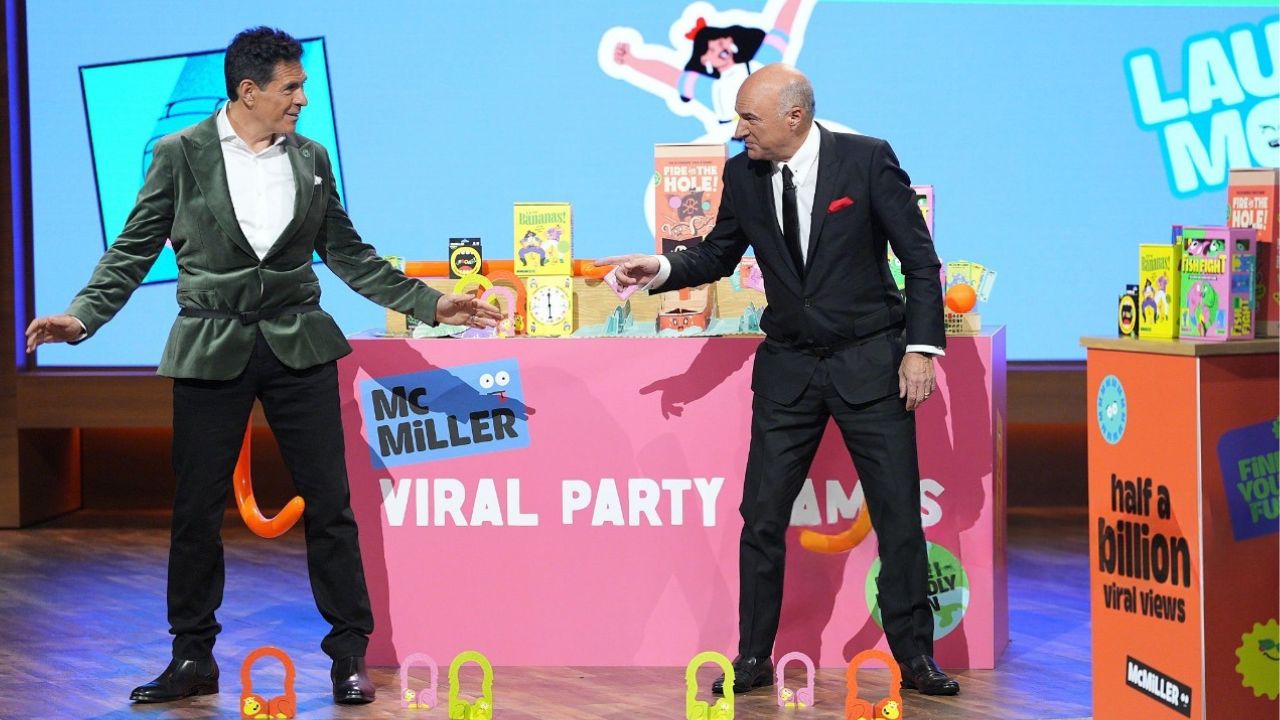
- Entrepreneurs: David McGranaghan and Julian Miller
- Business: Viral party game
- Ask: $200,000 for 5% equity
- Result: $200,000 for 9% equity plus a $0.99 royalty per sale until the investment is paid back
- Shark: Daniel Lubetzky
Husbands duo, David and Julian, stepped into the tank with the kind of energy you feel at the start of a good party.
They asked for an investment for their viral party game company, McMILLER. They described a common problem. Parties feel dull. Guests drift to their phones. No one connects.
Their solution was McMILLER, a line of fast, screen-free games made to pull people together. They explained that their games were easy to learn and fun to watch, which made them work for all ages.
Whether it was clawing your way through Catmeh, racing with Fish Fay, or going wild with It’s Bananas, their whole point was shared laughter.
Daymond John asked what games they brought. That opened the door for a quick demo of It’s Bananas, which sent Kevin O’Leary and Daniel Lubetzky into a goofy race with monkey tails. The chaos worked. Everyone laughed, and the sharks loosened up.
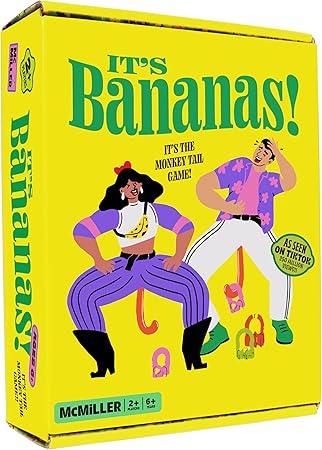
Meanwhile, Daniel then asked who the games were really for, adults or kids. David said both. He explained that It’s Bananas shows up everywhere from bachelorette parties to Christmas gatherings. Nothing about the brand boxed people in.
Daymond then asked about the fish props. Julian said it was Fish Fight, their fifth game, launching that weekend. He added that It’s Bananas had passed 650,000 units sold. Kevin immediately asked what that total meant in dollars. They answered with $12.5 million in revenue.
Lori Greiner shifted to the timeline. She asked when the business took off. Julian said momentum started during COVID. They built the company as a side hustle, then watched demand rise year after year.
In terms of their background, they shared that they met on a blind date in 2009, got married, and have been running the company full-time for five years.
Kevin moved the discussion toward distribution. He asked if they sold online or in stores. David said they focused on e-commerce and leaned heavily on Amazon. They were strong in Q4 and wanted retail expansion.
Kevin then asked for year-by-year sales. Julian explained the path. Their early year hit just under $1 million. They jumped to $3 million the next year. They held at $3 million while fixing operations, then reached $3.2 million with $120,000 in profit.
This year, they were on track for $5 million and $750,000 in profit. They also said they were entering China and Europe because their games used minimal language.
Barbara Corcoran asked which game went viral. Julian said It’s Bananas. He explained that they design their games for social media. They focus on clips that make people stop scrolling. One video sold them out in hours.
Meanwhile, Daniel asked about the price and cost. Julian said retail was $23.99, and landed cost was $3. The margin impressed him.
However, Kevin pushed back on valuation. He said their numbers placed them closer to a $1 million value. He stepped out soon after.
In the end, Barbara offered $200,000 for 10% equity with a $2 royalty until repayment.
Daniel matched her. Daymond matched her, too. Lori considered joining as well. The royalty then dropped as they competed. Barbara went to $1. Daniel went to $0.99.
In the end, David countered Daniel for 8% equity. Daniel pushed for 9%. Julian and David accepted.
With a deal in hand, let’s get a McMILLER update to see how David and Julian are doing.
Shark Tank McMILLER Update
In terms of a McMILLER update, the deal made on the show appears to be moving toward a final handshake, after Daniel Lubetzky publicly gave the founders a shoutout on his personal Instagram account following the episode’s airing.
Shortly after the episode aired, the company also saw the impact of the “Shark Tank effect” and received a big boost in sales.
To capitalize on its
Based on our McMILLER update research, the company has now surpassed one million units sold and generated more than 500 million views across social media platforms.
We’ll return with another McMILLER update as more details emerge.
or more updates from
Before you go, be sure to check out our list of all the

Marvin Uzor
Marvin Uzor is a content contributor for Shark Tank Recap. He specializes in crafting engaging, well-researched content that delve into the latest Shark Tank stories, keeping readers hooked. He has a soft spot for his favorite Shark Tank companies, Bombas and Doorbot, known for their innovation and impact.