

Shalom Japan Update | Shark Tank Season 17
While running their Brooklyn restaurant, Sawako Okochi and Aaron Israel realized that people from outside New York kept asking how they could try their famous matzoh ball ramen. The dish had become a local favorite, but distance kept ‘die-hards’ from having a taste of it. For this reason, they created Shalom Japan ramen kits, a quick, ready-to-cook version that lets anyone enjoy the same flavors at home. Will this idea get the sharks hungry to invest? Let’s find out in our Shalom Japan update and pitch recap.
If you’re short on time, here’s a quick overview of what happened to Shalom Japan after
Sawako and Aaron entered
In terms of a Shalom Japan update, the company received a lot of media attention and was featured in media outlets like The Times of Israel, among many others.
| Shark | Result |
| Barbara Corcoran | Accepted offer of $200,000 for 30% equity, contingent on Cousins Maine Lobster joining the deal |
| Kevin O’Leary | No offer |
| Lori Greiner | No offer |
| Daymond John | No offer |
| Daniel Lubetzky | No offer |
Shark Tank Shalom Japan Pitch
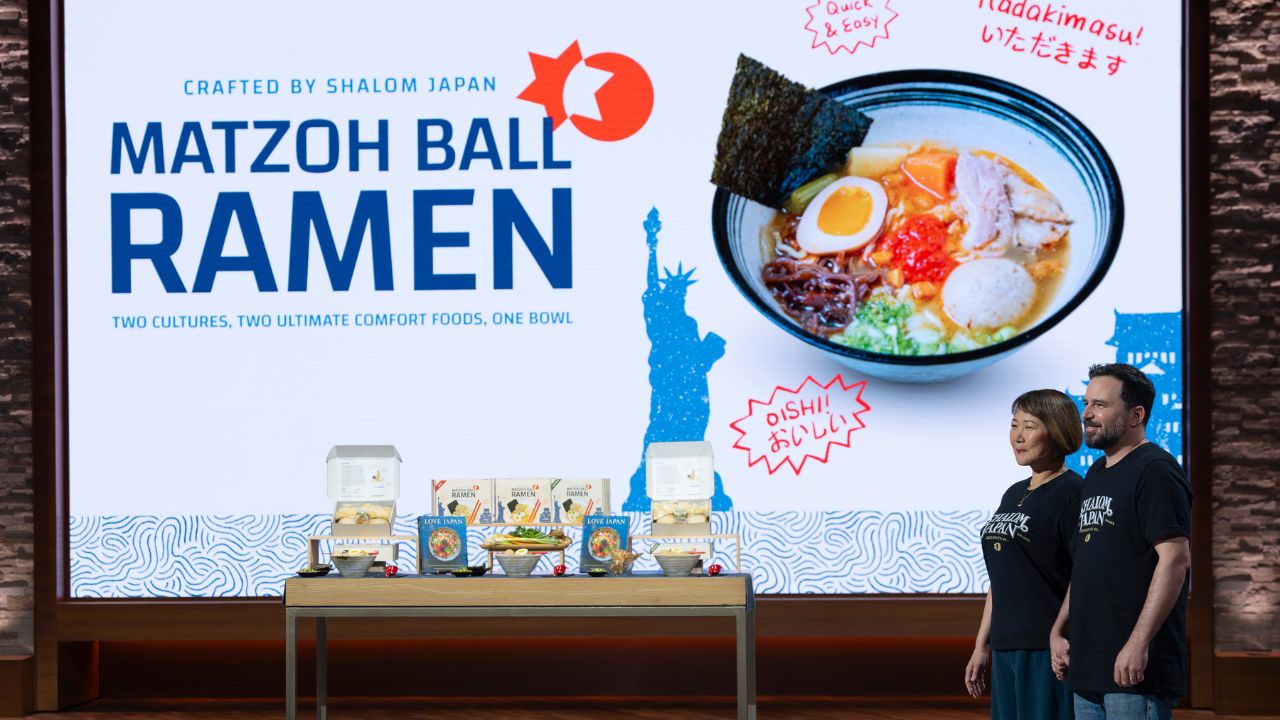
- Entrepreneurs: Sawako Okochi and Aaron Israel
- Business: Matzoh ball ramen
- Ask: $200,000 for 20% equity
- Result: $200,000 for 30% equity, contingent on Cousins Maine Lobster joining the deal
- Shark: Barbara Corcoran
The unique selling point for Shalom Japan is that it combines Japanese and Jewish cuisine into one signature dish, matzoh ball ramen.
Aaron started by explaining to the sharks that the idea came from their own kitchen. He grew up in New York, and Sawako is from Hiroshima.
When he made his mother’s matzoh ball soup for her, she suggested adding ramen noodles.
That was the exact moment that inspired the husband and wife duo to open their Brooklyn restaurant and later create matzoh ball ramen kits for home cooks across the country.
The kits include everything needed to make their best-selling dish in just ten minutes. Each one serves two people and comes with broth, ramen noodles, scallions, and toppings.
Customers simply heat the soup pouch, cook the noodles, and combine both in a bowl. The kits are currently sold nationwide through Goldbelly.
The sharks were immediately drawn in by the aroma. Lori Grienier said the broth was “really, really nice,” and Daniel Lubetzky called it “exquisite.” Barbara Corcoran and Daymond John both said it tasted amazing.
Kevin O’Leary, who has experience investing in food brands like PhoLicious, asked if their kits required refrigeration. Sawako confirmed that they did.
Kevin warned that shipping frozen products could make retail expansion difficult. Daniel followed up, asking if it could be made shelf-stable instead.
Aaron said that’s exactly what they wanted help with — tweaking the recipe to make it easier to store and sell in more places.
When asked about pricing, Aaron said Goldbelly sells each kit for $79.95, which includes shipping and packaging. They sell it for $30 per portion for two at their restaurant.
Each kit costs about $9.60 to produce, with packaging making up most of the expense. Lori asked if they could bring the price down, and Sawako said they hoped to sell future versions for around $20 in stores.
Barbara pointed out that relying on Goldbelly limited their reach. Aaron admitted they’d only made about $17,000 in sales so far because they were producing small batches out of their Brooklyn restaurant. Barbara smiled, saying she had eaten there before and called it “phenomenal.”
Aaron explained that Shalom Japan opened in 2013, and the matzoh ball ramen had been their top seller since day one. Sawako added that nearly half of their diners order it.
Daniel praised the concept but said expanding it would take time and focus. He worried that running a busy restaurant could make it harder for them to scale the new venture.
Sawako said that’s exactly why they came to
Barbara then made an offer of $200,000 for 30% equity, contingent on partnering with her friends from Cousins Maine Lobster to launch food trucks featuring the ramen. Daniel and Lori both called the idea “genius.”
Aaron countered with 25%, but Barbara held firm. After a short discussion, the entrepreneurs accepted Barbara’s offer.
Now that we understand how the negotiations on
Shark Tank Shalom Japan Update
We have no confirmation yet if the deal with Barbara went through. However, in a statement to the Jewish Telegraphic Agency (JTA), Aaron shared that they are “still in the process of working on what is next for us” when discussing the deal with Barbara.
Our Shalom Japan update found that since airing, the Brooklyn-based restaurant has experienced new growth opportunities and nationwide attention for its Jewish–Japanese fusion concept.
After their
Media outlets such as The Times of Israel and other lifestyle platforms also featured the restaurant among a new wave of innovative Jewish comfort foods.
We’ll keep an eye on Sawako and Aaron and bring you the latest in our next Shalom Japan update.
For more updates from
Before you go, be sure to check out our list of all the

Marvin Uzor
Marvin Uzor is a content contributor for Shark Tank Recap. He specializes in crafting engaging, well-researched content that delve into the latest Shark Tank stories, keeping readers hooked. He has a soft spot for his favorite Shark Tank companies, Bombas and Doorbot, known for their innovation and impact.